
Spiritual Wellness

This page focuses on spiritual wellness, and to sharing tools and spiritual practices that
help us move through grief, loss and disappointment and remain happy, grounded, and
content.
Jesus reminds us that “My purpose is to give life in all its fullness” (John 10:10b, Living
Bible). This is the frame by which we are inspired.
We are devoted to providing wellness information related to how we come to know
ourselves, about spiritual practices, and about how we understand other people.
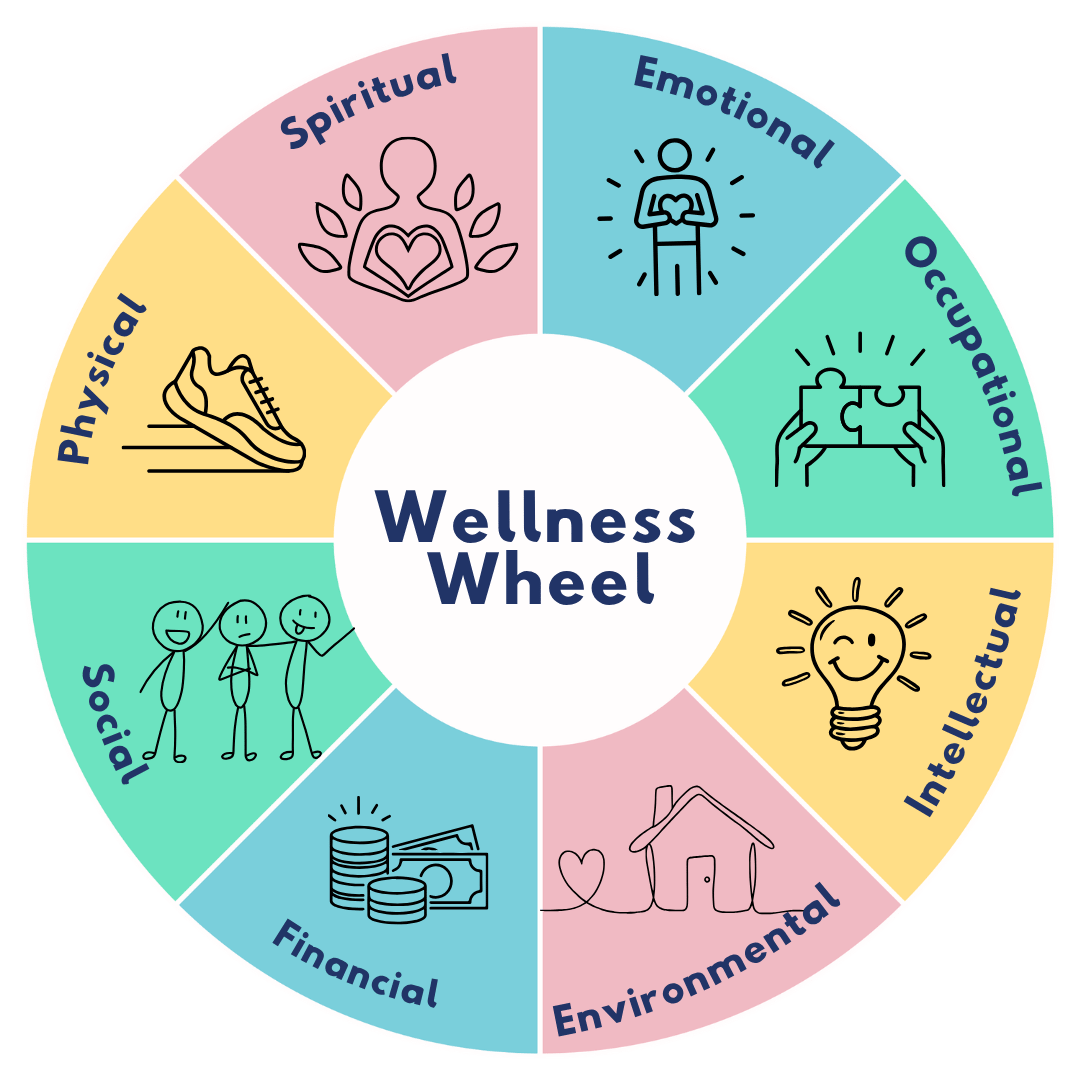
The Wellness Wheel, developed in the 1970s and refined and popularized since then, demonstrates that spiritual wellness is complemented by other interconnecting aspects of wellness.
We will also provide practical information for the spiritual care of others including how to develop active listening skills, how to conduct visits (in hospitals, hospices and care- centres), how (and when) to pray, how to care for ourselves, and how to build spiritual care teams. The United Church of Christ has a well-developed and successful wellness program. You are invited to visit its Wellness Ministry page where you will find many resources that will inspire, instruct, and enlighten you.
We are happy to hear from you and invite your comments and your sharing.
We will also provide practical information for the spiritual care of others including how to develop active listening skills, how to conduct visits (in hospitals, hospices and care-centres), how (and when) to pray, how to care for ourselves, and how to build spiritual care teams.
In addition to these resources, The United Church of Christ has a well-developed and successful wellness program. You are invited to visit its Wellness Ministry page where you will find many resources that will inspire, instruct, and enlighten you.
We are happy to hear from you and invite your comments and your sharing.

Bibliography
These resources are compiled by Rev. Dr. Geoffrey Simmins, an ordained minister in The United Church of Canada with a strong interest in spiritual care. In addition to serving congregations in Calgary and area, he has provided leadership to Chinook Winds as the coordinator of hospital ministry. He believes that spiritual care tools and practices help us develop compassion, both for ourselves and for others.
AlNujaidi, Heba Yaagoub, Saja A Al-Rayes, and Arwa Alumran. “The Evolution of Wellness Models: Implications for Women’s Health and Well-Being.” International Journal of Women’s Health 17 (March 2025): 597–613. https://doi.org/10.2147/IJWH.S498027.
Myers, Jane E. and Sweeney, Thomas. “The Indivisible Self: An Evidence-Based Model of Wellness.” Journal of Individual Psychology 60, no. 3 (2004): 234–45.