
By Rev. Bill Weaver
“The fact that we have more people here tonight than we have chairs tells me Albertans are looking for a better conversation. So let’s have one. Welcome to Prepared to Drown.”
That became my words of welcome every Friday through August to a room full of people in our basement at McDougall United Church, Calgary.
We did not, in all honesty, see this coming …
In July, when we wrapped the second season of our amateur, live-recorded church podcast, Prepared to Drown, we decided to use the month before season three for an experiment: a stripped-down, four-part weekly series about Alberta’s referendum. The subject was already exhausting people, and we assumed it would be a quieter month for the podcast.
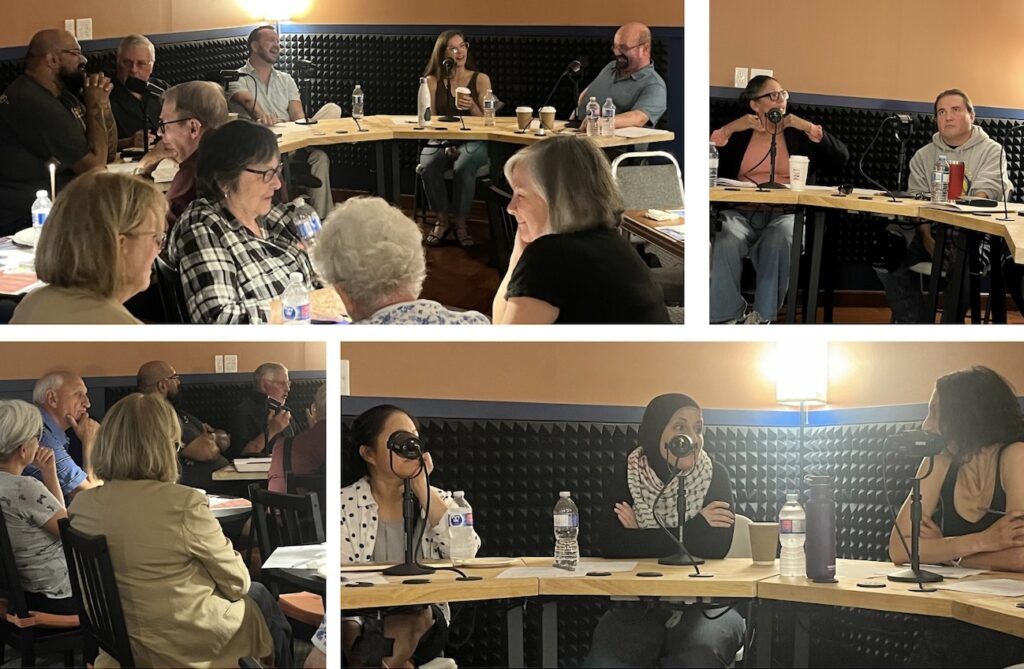
In the lead-up to the first Friday evening, registrations pushed us beyond the room’s capacity, and we began turning people away. On the first recording night, our local NDP MLA was at the table. Someone arrived at the door and asked, “Is this where I go for the separatist meeting?” Soon afterward, a UCP staffer took a seat near the front and spent the evening taking notes. That was when I realized I needed to say something before we began.
Before we hit record each week, we were direct with our audience about the convictions guiding the series. Our life in the United Church has formed our commitments to the common good, public responsibility, reconciliation, justice and human dignity. Those commitments shaped the questions we asked and led us to make a case for voting No on Questions 1 through 9 and remaining a province of Canada on Question 10. We had to be direct. We never really knew who was sitting in the audience, but we had no interest in manufacturing some fake sense of political balance just to keep everyone comfortable. Each week, after sharing our position and expectations, I ended the preamble with the same words: “Albertans are looking for a better conversation. So, let’s have one.”
We also tried to hold ourselves accountable for that better conversation at the podcast table: for our own biases, for the language we used about people whose opinions differed from ours, and for the temptation to turn political categories into fixed descriptions of whole groups of people. Because the podcast is live and unedited, that work sometimes happened as we paused, reconsidered and pulled one another back. It was difficult work, and you can hear those moments in the episodes. More than once, audience members told us that the combination of clear convictions and a willingness to examine our own language made the conversation safe enough for them to engage with it.
The audience remained varied through the rest of the recordings, including people with no previous connection to McDougall or the United Church. We had to remove the live-music setup to make room for more chairs. Eventually, we had to admit it: there was clearly something happening here.
Over four evenings, our regular panel was joined by ten guests: an elected representative, immigrants and newcomers, academics, labour and anti-poverty voices, ministers, and Indigenous guests speaking from their own experiences of land, Treaty and belonging. Together, we explored the stories Albertans tell about ourselves, the boundaries we draw around belonging, the concentration of provincial power, and the relationships that long predate Alberta itself.
People with different political commitments continued to show up in our growing audience. They listened, laughed, occasionally shifted uncomfortably in their chairs, and stayed with conversations that repeatedly demanded more of them and of us as podcasters. In our final episode, the conversation carried us past the planned intermission. When it ended, the audience rose, stretching stiff backs and looking genuinely surprised by how much time had passed. Nobody left early. Nobody checked their watch.
We believe the groundswell around this series reveals a real desire to understand what is happening. Underneath all the exhaustion, confusion and anger, Albertans are looking for places where difficult questions can be taken seriously. They want to hear from people who know these issues through research, public service, work, family and lived experience. They are willing to come down into our church basement and spend an evening listening to people they may not agree with.
For those of us in this United Church, I think that is worth noticing.
Through this podcast, we have been doing something I believe churches can do remarkably well: opening our doors, adding chairs, gathering neighbours around a table, naming our convictions honestly, and inviting people into a conversation with real human stakes. We built the series in our church basement with live microphones, generous guests and an audience willing to keep coming back.
Many of the people finding us online have no previous connection to Sunday worship. Through the podcast, they met us as people of the United Church trying to take our faith seriously in public. We brought the questions and commitments of our faith to the same table as guests describing what the referendum proposals could mean for their healthcare, income, safety, citizenship, rights and relationships. We listened for what happens when faith and lived experience speak to each other.
Perhaps that is what the extra chairs are telling us. The language and commitments of our faith still have something to offer Alberta’s public life. People are hungry for conversations that reach beneath partisan reflexes and attend to the lives affected by political choices. Some of them are finding that kind of space with us.
The complete referendum series is available at preparedtodrown.com/referendum or wherever you listen to podcasts. I’ll shamelessly encourage you to listen, because we believe something meaningful happened in those conversations. They were recorded here in Alberta, while the questions were very much alive around us, among people who will share whatever future our votes create.
More importantly, I hope congregations across Alberta will create their own spaces for this work in the month ahead. Gather people around a table. Listen to those who will carry the consequences most directly. Name the values shaping your community. Make room for disagreement and hold yourselves accountable for how you speak about those who see things differently.
The public conversation is already well underway, and the loudest voices in Alberta do not speak for all of us. Our communities have something worth contributing before the ballots are cast—and responsibilities that will continue afterward.
The fact that we had more people than chairs tells us Albertans are looking for a better conversation, O Church. So, let’s have one.